LogicwellTechnologies

Search Engine Optimization (SEO) vs. Pay Per Click (PPC): Which Strategy is Better for Your Business?

ppc-digital-marketing

Search Engine Optimization (SEO) vs. Pay Per Click (PPC): Which Strategy is Better for Your Business?

When it comes to building an effective digital strategy, most of businesses often face the question: Should I go for the investment in Search Engine Optimization (SEO) or in Pay Per Click (PPC)? Both are the key components of search engine marketing, but they operates in a very different way. While SEO drives organic traffic on your website through long-term visibility planning and efforts, PPC uses for paid ads for immediate results. The real question is not this, that which one is better—it is how each could fits into your business goals.

In this blog, we are going to explore the differences between SEO and PPC, will analyze their costs and benefits, and explain why a combination of both could works best.

Search Engine Optimization is the strategic process of improving the search visibility of your website in organic searches from different search engines. SEO helps in appearance of your website through the optimized content, keywords optimization, strong backlinks, and technical improvements.

Benefits of SEO:

  • SEO helps in generating long-term and consistent traffic.
  • SEO helps in building credibility and trust with users.
  • SEO is cost-effective as compared to continuous ad spend.
  • SEO helps in improving user experience through optimized content and site structure.

Limitations:

  • SEO is a little bit long term process so results could take months to materialize.
  • Highly competitive industries will need to require continuous effort to maintain their rankings.

What is Pay Per Click (PPC)?

Pay Per Click (PPC) refers to a model of paid ads on where you will pay only when someone clicks on your advertisement. Google Ads and social platforms are popular PPC channels. Unlike SEO, PPC will give instant visibility to your website by placing it business at the top of search engine results.

Benefits of PPC:

  • Immediate results—traffic starts flowing as soon as your ad campaign will go live.
  • Your ads are going to be highly targeted and will be based on keywords, demographics, and location.
  • Scalable—you can increase or decrease your budget and that is totally depending on performance.
  • PPC is the great option for promotions, for product launches, or for seasonal campaigns.

Limitations:

  • Traffic on your website will automatically stop once you stop paying.
  • PPC could be expensive in competitive industries.
  • PPC always requires a continuous monitoring and optimization.

Cost-Benefit Analysis: SEO vs. PPC

When evaluating search engine marketing, businesses often compare the cost against long-term value.

  • SEO Costs: SEO requires upfront investment for content, for keywords optimization, and for technical improvements, it provides sustainable returns. Once your site ranks high, you will be continued to attract traffic on your website without paying per click cost amount.
  • PPC Costs: The main advantage of PPC, you will need to pay directly for search visibility. PPC is very effective for short-term goals, but the advertisement costs could escalate quickly, especially for competitive keywords. However, ROI could be strong if your paid campaigns are well-managed.

In essence, SEO is like owning a house—you can build equity over time. On the other hand, PPC is like renting—you will need to pay for immediate use but stop benefiting once payments end. 

Ideal Scenarios for Each Strategy
  • When SEO Works Best:
    • SEO works best while businesses are looking for long-term growth and consistent visibility of their website.
    • The Brands who are aiming to the establishment of the authority and credibility in their industry.
    • Companies with a moderate budget and patience to see results over time.
  • When PPC Works Best:
    • The businesses that are in needing of immediate traffic and quick conversions.
    • The companies that are giving seasonal promotions, limited-time offers, or going to launch a new product.
    • Companies that operating in highly competitive spaces on where organic rankings are really very tough.
SEO and PPC: Better Together

The truth is that it is not only a matter of SEO vs. PPC—these both strategies complement each other. A well-balanced digital strategy works well by including both (SEO and PPC).

  • PPC provides quick data on high-performing keywords, which can be used to shape long-term SEO efforts.
  • SEO builds trust and long-term authority, while PPC delivers instant visibility during important campaigns.
  • Using both ensures a steady flow of traffic—organic growth through SEO and targeted boosts through PPC.

By combining the strengths of Search Engine Optimization and Pay Per Click, businesses can maximize their ROI, could balance immediate needs with long-term growth, and create a more resilient marketing approach. 

Final Thoughts

Deciding between SEO and PPC is totally depends on your business goals, timeline, and budget. If you want a sustainable growth, SEO is your best part. If you need fast results, then PPC is best for you. But for businesses that want the best in no time but for long time, then integrating the both (SEO plus PPC) strategies is the ultimate solution.

At Logicwell Technologies, we help businesses to craft the data-driven strategies that balance search engine marketing tactics like SEO and PPC to achieve short time goals and long-term success. By leveraging the power of both, your brand can enjoy stronger visibility, better traffic, and higher conversions. 

In What Ways Can Social Media Optimization (SMO) Enhance Your Brand Image?

Social Media Platform logicwell technologies

In What Ways Can Social Media Optimization (SMO) Enhance Your Brand Image?

In today’s business landscape, the image of a brand is one of its most valuable properties and much of it now also helps in improving online reputation. Unlike earlier times, when carefully designed campaigns could shape perception, a brand image in today’s time is deeply influenced by on-going conversations across social and digital platforms. All this makes Social Media Optimization (SMO) essential. By applying the right SMO strategies, businesses can amplify their brand visibility, strengthen brand reputation, can build their customer trust, and could support their overall online reputation management efforts.

What is Social Media Optimization (SMO)?

Social Media Optimization (SMO) is the strategic use of social platforms to improve the visibility of brand, user engagement, and awareness about products or services. The focus of SMO on creating meaningful content in the form of graphics for optimizing the profiles of user or the profile of a business page, actively engaging in conversations, and building meaningful networks, allowing the audiences to connect with the brand and its offerings in more effective way.

Just like SEO, social media optimization has its own unique activities modules and focus. Platforms like Facebook, Instagram, LinkedIn, and Twitter now became highly influential in present time. The priority has now been moved from simply obtaining followers to fostering genuine interactions and meaningful engagement with the brand.

Why SMO Matters for Brand Reputation:

In the digital landscape, your brand is under scrutiny on regular basis. A negative review, failure on responding to a message, or lack of social media activities can significantly vanish the reputation of your brand. Conversely, a well-planned social media strategy could help you in optimizing the reputation of your brand, helps in building authority, showcase transparency, and scale of trust.

Here’s how SMO enhances your brand reputation: 

  1. Improves Online Exposure: In the digital world, with millions of your business competitor, an active social media presence could help you to gain a well-deserved competitive edge for your brand. Regular interaction with audiences through posts, by carefully selecting hashtags, and engaging with multimedia content could improve the repo of your brand and also help in improving the possibilities of standing with your brand.
  1. Improves Engagement and Trust: For many consumers, social media could be the first contact point with the company. Effective SMO makes a brand more approachable, fostering trust and credibility. Businesses that are actively responding to inquiries, engaging with the comments, and maintaining transparency are more effective to realize the audience that you and your brand is more reliable and trustworthy.
  1. Enhances Online Reputation Management (ORM): Social media plays a very Important role in brand repo management. Companies that actively monitor reviews, mentions, and the feedback of their customers in real-time, can quickly address concerns and could prevent potential brand crises. By neglecting SMO could harm the image of a brand, whereas timely engagement and adjustments are essential to maintaining a strong reputation strategy.
  1. Reinforces Brand Reputation: Integrated branding in the use of logos, messaging, and tone allows for greater recognition and consistent branding. By highlighting your brand values and key mission in optimized social content allows for a good reputation in front of the audience.
  1. Fosters Brand Advocacy: When your audience is sharing your posts, reviews, or other materials, it will help you in enhancing your reputation rapidly. SMO has the capability in producing content that is sharable with the potential for multiplying positive brand exposure. 

SMO Techniques for Enhancing Brand Reputation:

By having a good and actionable structure is compulsory for any method SMO to be effective for your business.

Here are approaches Listed:

  • Complete All Social Media Profile: Each and every single detail (Contact, Profile pic, About you and your brand) in your brand bio profile must be accurate and in a good, It will convey a good message to your audience that you are a very professional.

  • Publish Interactive Content: By posting, informative and relevant content (Image, videos, info graphic and textual content) could be more engaging and will help you in user engagement.

  • Regular content sharing will help you in building your brand image and the position of your brand

  • Utilize ORM Monitoring Systems: Basically, ORM monitoring systems is used to track mentions, reviews, and feedback for proactive reputation management.

  • Assist ORM Monitoring Systems: Automated or systems or manual process are can be used for tracking reviews, mentions, and feedback can assist proactive reputation management.
  • Automation Covers All Direct Interactions: Automatic messaging for thanking loyal customers of brand, addressing complaints, and a quick responding to messages will also help in maintain brand image. Interactions could make the brand seems like as a human and personal.
  • Engagement with Trusted Influencers: Trusted influencers could help in extending reach with the use of partnerships program.
The Link Between SMO and Sustained Brand Development:

Effective social channel optimization will help in protecting and in enhancing your brand image while maintaining a sustainable business growth. When a customer realized that you and your brand is more engaging and being responsive on time, it is creating loyalty for your brand. Then your brand loyalty will help you to protect your brand and help you to promote your brand.


This creates a self-sustaining cycle: enhancing brand reputation, improving brand trust, which increases conversion, enhances retention, and promotes the growth of your brand. 

Closing Remarks:

In the age of the social media conversation, SMO is a necessity for protecting your brand reputation and enhancement. SMO is the link that can connects your brand with the huge audience, the brand visibility, engagement, ORM, and trust that SMO can builds over the time is done in the most genuine and effective way. 

We at Logicwell Technologies assist businesses in building and maintaining their reputation by developing customized strategies, enabling social media presence with brand-recognized and self-sustained growth. Let us help you to optimize your brand with the help of social media optimization which you deserve so let us take the charge of your online reputation.

How to Legally Remove a Passive or Inactive LLC Member? 

llc-limited-liability-company-business-financial-concept-business-planning

How to Legally Remove a Passive or Inactive LLC Member? 

Operating a Limited Liability Company (LLC) requires full engagement from each member. But what if one member completely goes MIA or stops being active in the business? An inactive or passive LLC member can pose a multitude of challenges from making decisions for having to carry the financial burden on the active members. It’s essential to understand the legal routes of removal and how to retain business stability to ensure compliance. 

Why Removing an Inactive Member May Be Necessary?

The strength of an LLC lies in the active participation and collaboration of its members. When a member withdraws from contributing—whether by neglecting responsibilities, withholding resources, or disengaging from daily operations—the balance of the business is disrupted. Instead of supporting growth, inactive members can become a liability, they can also lead to:

  • Draining business resources for no output
  • Shallow strategies and bad business decisions
  • Negative impact on the company’s reputation
  • Missed opportunities for growth

In the long run, legally removing an individual who does not contribute may be the best avenue to take.

Step 1: Examine the Operating Agreement:

An operating agreement serves as the backbone of your LLC, functioning much like its internal constitution. Most agreements outline provisions for handling situations involving dormant or inactive members. The removal of a member often results in changes to the ownership structure of the LLC, though the specific circumstances can vary from case to case.

Search for the following sections:


  • Member exit upon personal discretion
  • Membership termination through involuntary action
  • Buyout provisions for ownership interests

If these provisions are available, ensure strict adherence to them. This will foster transparency and reduce the likelihood of disputes.

Step 2: State Regulations and Legal Framework:-

If your operating agreement lacks specific terms for removal, you will need to turn to the applicable state LLC laws. Every state has its own set of rules with respect to removal of members and equity ownership. For instance, some states may require all remaining members to unanimously agree to sign off, while others will only demand a simple majority. It is always a best practice to involve a legal expert to help you stay compliant.

Step 3: Negotiation and Voluntary Resignation:

More often than not, the most effective approach is to negotiate with the dormant member to step down voluntarily. Offering them a buyout of some type or a fair market buyout of their equity stake can help resolve the problem early in the legal action spectrum. This manner reduces disputes while upholding professional rapport.

Step 4: Forced Buyout and Removal:

When voluntary withdrawal cannot be executed, you may proceed with forced removal of LLC member, if it is permitted by law or the operating agreement. Buyout is typically necessary, where the withdrawn and inactive member’s ownership stake is compensated, Professional valuation mitigates disputes. 

Step 5: Filing and Legal Documentation:

After the member’s removal, all legal documents and financial records must be kept up to date: 

  • Amend the operating agreement
  • Submit changes to the Articles of Organization with the state (if applicable)
  • Amend tax and financial records
  • Notify financial and banking institutions

Well-documented record keeping eliminates business disputes and preserving order. 

Step 6: Legal and Tax Advisors: 

As much as removing a member of an LLC is a legal issue, it is also a tax issue. Changes in profit allocation, capital contributions, and ownership interests as a result of withdrawal triggers a tax issue. Legal and tax specialists guard you from errors in managing these changes. 

Closing Remarks:

Removing a member from an LLC – whether passive or inactive – could be a complex but necessary step must be taken for the good health of the business. This process may involve voluntary withdrawals or buyouts, and in some cases, legal action. Regardless of the method, it is essential to follow state compliance requirements, respect ownership rights, and adhere to proper procedures to ensure a smooth transition.

At Logicwell Technologies, we assist companies in overcoming legal, financial, and compliance issues with absolute precision. If you have problems with dormant LLC members, we are ready to assist you in step by step procedures while ensuring that your company stays compliant and ready to grow.

How to hire the right and best Mobile Application (App) Development Company for your app development solution?

mobile app development

How to hire the right and best Mobile Application (App) Development Company for your app development solution?

In today’s digital world, mobile applications are no longer optional—Mobile Apps are essential for customer engagement, business growth, and brand visibility. However, choosing the right mobile application development company can feel overwhelming with so many options available. The key lies in identifying a partner who understands your vision, aligns with your business goals, and delivers high-quality solutions.

You can simply start by defining your app’s purpose and target audience. Knowing whether you need an eCommerce app, on-demand service app, or enterprise solution will help narrow down potential partners with the right expertise. Always review a company’s portfolio to evaluate their design style, technical skills, and industry experience. Previous projects provide insights into whether they can handle your specific requirements.

Client reviews and testimonials are equally important. They highlight reliability, communication, and after-launch support—critical factors in long-term collaboration. Ensure the company follows a transparent process, from planning and design to development and testing, so you stay involved at every stage.

Technical proficiency is another deciding factor. The right partner will be skilled in the latest frameworks, platforms (iOS, Android, cross-platform), and emerging technologies like AI or IoT, ensuring your app stays future-ready.

Finally, discuss pricing and timelines upfront. While affordability matters, never compromise on quality for a cheaper deal. A trustworthy company will offer competitive pricing without hidden costs and provide on-going support for updates and scalability.

Get the right application that suits your business by hiring expert:

United States of America is having a strong position on the planet, in the quantity of dynamic Mobile telephones clients. The quantity of individuals who possess and utilize mobile phones, keeps on developing. A few years back, the Companies were simply enlisting the business Professional and software engineers for Research and Development of Apps and for marketing them too. For Smarter telephones, and Computer Tablets, which are coming in the Market the Requirement for Developing the Applications, are additionally being increased. Creating and Marketing the Apps for Smart telephones and Tablets is unique Platform for any software Development Company.

If you need to pick up the advantages of Mobile Applications, you have to hire a best Mobile App development company that will recognize your Requirements and Develop standard Applications for you. There are a few Companies, which provide these Apps Development Services with various choices, yet you have to pick a correct Mobile Application Development Company according to your requirements. The beneath are the portion of the fundamental tips that will help you to choose an Appropriate Company.

Check past Projects of the Company: You should take a gander at their works, which have brought enormous Profits and downloaded by number of clients. The primary reason for the Apps is to get tremendous Profits thus it is critical for you to choose a correct Mobile Application Development Company according to your necessities.

Select a Certified Company: While hunting down for the Development Agency, you should pick affirmed Company, which have approved accreditation for the Application Development. Henceforth, they can ensure you Reliability and dependability of their Apps.

Check at Company Reputation and costs: You should check Company Reputation and customer’s tributes about the Company. You ought to likewise check with the current customers and online Reviews. It is Appropriate to compare the costs with different Companies, which Provide an indistinguishable Services as per your Requirements. Through this, you are ready to discover the best Company inside your financial plan.

Experience and creativity: It is constantly better to choose Mobile App development companies in Developing Apps for Mobile. Since, they will have gifted Developers and there will be few odds of mistakes in the Process. They will adjust new trends of Developments for Applications as indicated by the current Market.

Summary:

Thus, to locate a correct Mobile App Development Company, actualize the above tips for the best Results. Definitely, you can expect a great work from it, if you decide on a correct one yet it relies upon your Research and finding the Reasons to hire a Company. You likewise need to compare the costs with others, which are providing an indistinguishable works as per your Requirement.

What are the Common Challenges in Bank and Credit Card Account Reconciliation, How to Solve Them? 

What are the Common Challenges in Bank and Credit Card Account Reconciliation, How to Solve Them? 

With firms making use of all sorts of new innovations, it becomes more and more imaginable a company can lose track of its finance. Bank and credit card account reconciliation is an invaluable task that identifies potential financial discrepancies, enables firms to countercheck and verify for possible cash flow manipulation, potential fraud, and ensures the available financial data is precise and trustworthy. Despite the available technologies which aid in swift reconciliation of accounts, businesses, start-ups, and established firms alike all have varying and unique challenges. In this blog, we will explore the most common issues, which businesses have regarding reconciliation and outline, some resolutions to fix these issues. 

Why is Reconciliation Important?

Bank and credit card reconciliation involves cross-referencing all financial records available for the business with the corresponding records presented by banks and credit card holders. This is done with an intention of to help track and detect gaps that have potential discrepancies, address ones that have been identified, and in the end produce a financial document that is as precise as possible. Without reconciliation, a business is quite likely to suffer from poor financial management, fraud manipulation, poor business finances, and compliance penalties. 

Common Challenges in Bank and Credit Card Reconciliation:

  1. Volume of Transactions: Reconciliation becomes problematic, almost impossible, and an excruciating task for firms that have to manually track and reconcile for every transaction done within a business with banks for a single payment/ refund/ transfer for the same period of time. With an increased workload, the financial accounts for a business become a pain. Increased workload on its own to most finance experts translates to decreased precision and an increased probability of accuracy errors It often turns into a vicious cycle—the busier a firm gets, the harder reconciliation becomes. It becomes an ever-steeper hill to climb.

    Solution: Reconciliation is made easier through the automation of advanced accounting software. The software’s ability to match transactions automatically reduces the burden of work and error. 
  1. Timing Differences: Deposits, withdrawals, or credit card charges may be registered on the business’s internal records, however, they may not register on the bank’s external records or vice versa. These timing mismatches are some of the most common problems when it comes to reconciliation.

    Solution: Maintain an accurate record of the in-progress or in-transit transactions and buffer time in reporting deadlines. Regular weekly reconciliations help businesses balance out timing discrepancies in records proactively instead of waiting until the month is over. 
  1. Human Errors in Data Entry: Reconciling discrepancies that stem from incomplete, incorrect, or duplicated records is made difficult from the manual processes of data entry errors.

    Solution: The move to digital record-keeping reduces manual entry. Direct integration of accounting systems with bank feeds minimizes the likelihood of human error. 
  1. Multiple Bank and Credit Card Accounts: Companies now widen the scope of their transactions by operating multiple bank accounts or issuing credit cards to employees. Reconciling on different platforms becomes difficult as tracking expenses is made tedious.

    Solution: Use a singular interface or dashboard to streamline and improve visibility of the consolidated accounts. It becomes easier to balance expenses and track transactions when using reconciliation software that centralizes the financial data of a business.
  1. Fraudulent or Unauthorized Transactions: Letting time pass by without carrying out reconciliations can increase the chances of unidentified withdrawals, unsolicited credit card charges, and other forms of fraud going undetected.

    Solution: Set up automated alerts for unusual transactions and enforces strict company credit card approval processes. For optimal results, conduct reconciliations on a weekly or bi-weekly basis. 
  1. Un-cleared Checks and Pending Payments: Pending payments paired with un-cleared checks can distort the matching process when counting balances, leading businesses to wrongly assume the existence of errors.

    Solution: Set up a dedicated ledger to track issued un-cleared checks. Monitor with bankers and venders to ensure payment processes are carried out on a timely basis. 
  1. Foreign Currency Transactions: Businesses that work with overseas vendors are tasked with dealing with fluctuating foreign currency exchange rates, additional foreign currency fees, and their complexity in reconciliation.

    Solution: Leverage accounting systems that allow for multi-currency transactions, and regularly update exchange rate records. Classify rates clearly to avoid payment ambiguity. 

Best Practices to Simplify Reconciliation:

  • Automate when possible: Implement reconciliation tools to save time and reduce errors.
  • Establish a regular schedule by conducting weekly reconciliation sessions to ease the month-end workload.
  • Train employees: Standardize the reconciliation process and train finance teams to ensure consistency.
  • Enhance detail in records: Improve organization by making sure documents such as receipts, invoices, and bank statements are properly filed.


Reconciliations should be managed often: in order to catch errors in reconciliations, management should conduct reviews on a regular schedule. 

Final Thoughts:

In order to maintain the fiscal health of a given organization, build confidence in stakeholders, and assure compliance, bank and credit card account reconciliation is critical. Businesses may encounter timing discrepancies, human errors, or even unauthorized charges; however, these problems can be mitigated through automation, routine reviews, and industry standards. 

At Logicwell Technologies, we understand the importance of effective financial operation management, and thus, we offer practical solutions tailored to the specific needs of different businesses. Companies that proactively face reconciliation challenges are able to confidently and transparently manage their finances, attaining profound accuracy and peace of mind.

What are the Advantages and Disadvantages of Pay-Per-Click (PPC) Advertising?

ppc-digital-marketing

What are the Advantages and Disadvantages of Pay-Per-Click (PPC) Advertising?

In the fast-paced digital world, businesses on everywhere are battling to win customer attention. Pay-Per-Click (PPC) advertising has emerged as one of the most powerful tools to achieve this. Whether through Google Ads, Bing Ads, or targeted social media campaigns, PPC offers brands instant visibility and measurable performance. Yet, despite its advantages, PPC also presents unique challenges that businesses must navigate carefully.

In this blog, we will explain PPC, so you understand its advantages and disadvantages.

Advantages of Pay-Per-Click (PPC):

1.Immediate Outcomes: With SEO, generating traffic can take few weeks or few months’ time but with PPC, it is instant. With ads showing at specific times and on relevant platforms, traffic and clicks flow in almost instantly the moment the campaign is live.

2.Precisely Targeted Marketing: With PPC, you can reach the exact audience you have in mind. Targeting is possible through keywords, location, devices, languages, dated times, and audience behaviour. All of these factors make sure the ad budget is spent in the right places.

3.ROI is Measurable and Can Be Tracked: PPC provides powerful benefits, especially real-time performance tracking. Using platforms like Google Ads or Meta Ads Manager, you can monitor key metrics such as:

  • Impressions
  • Clicks
  • Conversions
  • Cost per Click (CPC)
  • Return on Ad Spend (ROAS)

All this data helps you make quick decisions and adapt your campaign to improve results.

4.Control Spending: PPC advertising gives you a full control on your daily spending budget. You can set daily or monthly limits and adjust them whenever needed. Its flexibility makes it a smart choice for both small businesses and large enterprises.

5.Exposure to Brands: Free visibility lets your business reach more people without extra cost. Appearing at the top of search results strengthens brand awareness, while consistent presence builds long-term trust and credibility.

Cons of Pay-Per-Click (PPC):

1.Most Expensive: The expense for PPC is a major downside, particularly in highly competitive fields like law, insurance, or real estate. Popular keywords can cost several dollars per click. Without careful management, you can burn through your budget quickly with little return value.

2.Click Fraud and Invalid Traffic: Every penny spent on PPC campaigns can invite click fraud, where bots or competitors click on your advertisements. Although protective measures exist, like on Google, they aren’t effective in dealing with all types of click fraud.

3.Ad Burnout: If your advertisement is not engaging, and your target audience doesn’t click on it, this can lead to Ad Burnout. In order to stop losing money, the advertisement needs to be watched very carefully, and the content needs to be updated frequently to reel in the users.

4.Advertisement Moderation: Moderation of the advertisement is crucial, as customer reviews, views, and ratings can make or break the business. Any new change from competitors, such as new products, lower prices, and discounts, needs to be reacted to with proper monitoring. PPC needs to be done frequently to help with brand awareness, improving customer-perceived value of the company.

5.Not Budget Friendly: Even if PPC sounds easy for some users, it can become overly complicated with the range of features available. Without prior knowledge, users may find themselves lost because of the different types of advertisement targeting available, leading to overspending through cpm and pay per click. 

Why Invest in PPC?:

While investing in PPC, businesses are capable of seeing fast improvement in customer traffic. This is great for users who are actively tracking their campaigns and ad spends. If business owners can catch PPC early enough, it can easily become the backbone of business development.

Blending PPC with SEO and other digital marketing techniques might serve your needs better if you’re on a tight budget or focused on long-term growth.  

How Logicwell Technologies Can Help?

At Logicwell Technologies, we specialize in creating high-performing PPC campaigns driven by data insights. Our certified experts handle every aspect, including:

  • In-depth keyword research
  • Compelling ad copywriting
  • Strategic campaign setup
  • Conversion tracking and analysis
  • On-going performance optimization

Precision management ensures your advertising budget is spent where it yields the greatest return on investment. Our PPC services align with your unique objectives whether you are trying to capture local leads or aiming for a global reach. 

Final Thoughts:

Like any form of advertising, Pay-Per-Click has its advantages, including speed, targeting, and return on investment. However, it also requires strict budgeting and oversight, making understanding both sides equally important. 

Looking to increase traffic and conversions? 

To know more about the PPC Advertising, connect with us now, and a specialist will help and craft a personalized PPC campaign tailored to your business needs.

What are the Top Benefits of Social Media Optimization for Businesses?

The Ultimate Guide to Social Media Optimization (SMO) for Business Growth

What are the Top Benefits of Social Media Optimization for Businesses?

Social Media Optimization (SMO) is more than just posting content on Facebook, Instagram, or LinkedIn. It’s a powerful way to build brand presence, increase customer engagement, and drive long-term business growth. At Logicwell Technologies, we provide dedicated SMO packages tailored to your business goals—whether you’re a start-up or an established enterprise.

In this blog, let’s explore the top benefits of SMO for businesses through some common questions and expert answers

What exactly is Social Media Optimization (SMO)?

Answer: Social Media Optimization (SMO) is the process of strategically enhancing profiles of your social media and content to increase visibility, engagement, and traffic. It involves optimizing posts, hashtags, visuals, timing, and even profile details to ensure your brand reaches the right audience.

How does SMO help improve brand awareness?

Answer: SMO creates consistency across all platforms by highlighting your business identity—logo, tone, and content style. With regular optimization, your brand becomes more recognizable and trustworthy. Over time, this visibility leads to stronger awareness and customer recall.

Can SMO increase website traffic and leads?

Answer: Yes! When your content is optimized with proper hashtags, engaging captions, and call-to-actions, it drives users from social platforms directly to your website. More traffic means higher chances of generating leads and sales. Many of our clients at Logicwell Technologies have reported significant website visits after implementing our SMO packages.

Does Social Media Optimization improve search engine rankings?

Answer: Indirectly, yes. While SMO itself is not a direct Google ranking factor, optimized social signals like shares, mentions, and consistent engagement boost your online authority. This positively impacts SEO, helping your business gain better visibility in search results.

How does SMO support customer engagement?

Answer: SMO encourages meaningful conversations. By responding quickly to comments, creating interactive posts, and using polls or stories, businesses build stronger relationships with customers. This engagement could often converts into long-term brand loyalty.

Are SMO services cost-effective for small businesses?

Answer: Absolutely. Unlike traditional advertising, SMO is budget-friendly and results-oriented. Logicwell Technologies offers affordable SMO packages designed for businesses of all sizes. From startups always wanting visibility to enterprises aiming for deeper engagement, our solutions are customized to fit on your budget.

What are the long-term benefits of SMO?

Answer: Consistent SMO efforts deliver:

  • A loyal online community
  • Improved brand credibility
  • Higher conversion rates
  • Stronger customer retention
  • Competitive advantage in the digital marketplace 

Final Thoughts

In today’s digital era, ignoring social media optimization means missing out on endless opportunities to connect with your audience. Businesses that invest in SMO services not only enjoy better online engagement but also see lasting results in traffic, branding, and sales.

At Logicwell Technologies, we understand that every business is unique. That is the reason why we offer flexible SMO packages, which are the best fit to meet your specific goals and ensure measurable growth.

Selecting Your E-Commerce Technology Stack: WooCommerce, Shopify, Magento, or Custom Solutions

ecommerce website

Selecting Your E-Commerce Technology Stack: WooCommerce, Shopify, Magento, or Custom Solutions

Your e-commerce platform serves a foundational role, as it supports your operational workflows, customers, and growth potential, in addition to serving as a storefront. Your store’s scalability, integration with third-party tools, and provision of a smooth shopping experience greatly rely on the tech stack chosen. Currently, Magento, WooCommerce, Shopify, and custom-built solutions are the four e-commerce platforms that businesses can choose from. Each platform offers a unique set of strengths tailored to different requirements.

1.Magento: Provides Enterprise-Grade Flexibility

Best for: Established businesses or those with accelerated growth plans that are dealing with complex requirements.

Magento is an open-source platform always known for its outstanding scalability and extensive customization capabilities. It is a preferred choice for businesses seeking complete flexibility in storefront design, features, and third-party application integrations.

Strengths:

Complex product catalogues for sophisticated businesses have enhanced customization.

Advanced marketing, SEO, and analytics can all be supported.

Strong multi-store and multi-language capabilities.

Considerations:

Requires a skilled development team.

Hosting and maintenance costs can be high.

Longer deployment time compared to SaaS solutions.

2.WooCommerce: WooCommerce is one of the most popular WordPress plugins, transforming a content-focused website into a fully functional e-commerce store. It is the preferred solution for businesses that already have a WordPress-hosted website.

Strengths:
Integrates effortlessly with existing WordPress sites.

Comes with a wide marketplace for plugins for payment processing, shipping, and advertising.

CMS ecommerce solution is a lower initial investment as compared to enterprise solutions.

Considerations:
Can be resource intensive with too many plugins installed.

Things are Dependent on the hosting performance for the website speed and performance.
Installation requires regular updates for WordPress, WooCommerce, and its plugins.

WooCommerce is an excellent choice if content management is a core part of your business.

Would you like me to suggest a few more variations for different tones (formal, professional, marketing-friendly)?

3.Shopify: Ready to Use and Simple

Best for: Businesses that are looking for a quick instantiation with little to no technical oversight.

Shopify is a fully hosted SaaS platform, meaning maintenance for servers, security patches, and infrastructure is irrelevant to you. It is ideal for entrepreneurs looking to start selling right away.

Strengths:

Uses an intuitive control panel for fast installation.

Hosting provided is secure and dependable.

Comes with a large app store and integrated payment options.

Considerations:

Less flexible compared to open-source counterparts.

There is always a monthly subscription fees and transaction charges apply, unless you opt for Shopify Payments.

Certain features are available only for an additional fee.

Shopify provides a robust and low-maintenance solution for merchants prioritizing speed-to-market and simplicity, offering services in a matter of minutes rather than hours. 

4.Custom Built E-Commerce Solutions: Tailored To Your Vision

Best For: Any business that has very specific workflows and requirements or with advanced and ground-breaking ideas. 

A custom-built e-commerce platform is developed from the ground up to align perfectly with your business vision and requirements. It allows you to integrate unique features, tailor the customer journey, and configure operational processes for maximum efficiency.

Would you like me to make it more formal and professional (for a corporate site) or more engaging and persuasive (for a sales/landing page)?

Strengths: 
Full access to features and design as a whole.

Perfect and Free from platform restrictions and dependent plugin ecosystems.

Can be built to optimize performance, SEO, and security from the outset.

Considerations: 

More costly and requires a longer development time.

You will needs a developer, freelancer or an agency for on-going changes and upkeep.

Poor planning can lead to the risk of being locked into a single vendor.

A custom solution guarantees that your technology for the ecommerce website development will be best supports your business structure. With a tailored solution that serves your unique business model.

What are the things to Consider When Selecting a Tech Stack

At this stage, consider asking yourself: 


  1. What is my budget, both in total and on a recurring basis?
  2. How complicated are my workflows and product catalogue?
  3. Will I need to scale internationally or manage multiple stores?
  4. What is my access to technical resources?
  5. Which is more important to me: a fast market entry, or extensive customization? 

Conclusion:

An e-commerce platform does not exist that fits all business use cases. Different customization, control, and functionality comes with varying trade-offs in ease of use, power and flexibility. Magento provides enterprise-grade power, WooCommerce is flexible for WordPress users, Shopify simplifies the selling process, and custom solutions give you unlimited control. 

At Logicwell Technologies, we assist companies in identifying and implementing the ideal tech stack in order to ensure that the e-commerce platform works promptly and scales as the business grows. Whether starting from the ground up or planning a migration, we provide the required technical expertise and strategic guidance to realize the vision of a fully functional online store.

How does Removal of a Member can Change the Ownership of an LLC?

llc-limited-liability-company-business-financial-concept-business-planning

How does Removal of a Member can Change the Ownership of an LLC?

In the context of Limited Liability Companies (LLCs), the exit of a member may cause an avalanche of changes—be it triggered by voluntary or forced removal. It changes the ownership structure, governance of operations, and even the long-term plans for the LLC. It is critical for long-term planning to understand the Member Removal repercussions to avoid instability.

1. Everything is Important: Framing the Reason

While LLCs come with great management flexibility, ownership is granted through a membership interest to a percentage which is more convenient than shares of stock. The number of shares even determine who receive profits, voting power, and control. Most modern LLCs operate under a comprehensive Operating Agreement, which governs the terms of the membership including change of membership.

2. Removal Processes: Voluntary and Involuntary

Voluntary Removal:


A member is able to resign if there is a provision in the Operating Agreement (OA). It most often comes with a notice period of 30 to 90 days followed by a triggered buy-out or a specified valuation method in the OA.


Involuntary Removal:


A member is liable to suffer consequences for breaching an agreement, committing detrimental actions, or a combination of both. With the use of Operating Agreement terms or through court judgement, involuntary removal is feasible, especially under the RULLCA scope.

3. Ownership Reallocation: What Happens Next

When a member leaves, their ownership stake is not lost. Based on the agreement, it can: 


  • Compensated members through buyout following valuation formulas.
  • Transferred completely to another member.
  • Remain unassigned temporarily pending disputes or risks of dissolution.

State LLC laws can trigger default ownership splits or LLC dissolution without explicit instructions.

4. Governance and Economic Factors:

Changes in Profit Distribution: 

With fewer members, the remaining owners may take a greater share of the company’s profits, and possibly greater responsibilities. The Operating Agreement may need to be modified to reflect the new allocations. 

Voting and Decision-Making: 

In a member-managed LLC, removing a LLC member shifts the voting balance, directly affecting decision-making. In a manager-managed LLC, the impact may be less direct, but it can still significantly influence strategic control.

5. Legal, Tax, and Administrative Areas:

Follow-Up Actions and Alerts: 

It is important to notify entities such as banks, the IRS with form 8822-B, insurers, and other registered agents for change of address, and update the Operating Agreement and Articles of Organization.


Tax Considerations:

Departing from an organization can set off a taxable capital gain for the leaving member. The LLC might also have to modify K-1 allocations or determine whether the tax status (single-member vs. multi-member) needs to be adjusted. 

6. Beyond the Numbers: Strategic and Cultural Balance

Changes in ownership involve more than just the figures. It involves the team’s structure and culture. Ensuring a change in ownership flows smoothly helps maintain operational integrity and morale. Well-defined exit strategies such as: buyout arrangements, valuation formulas, and right-of-first-refusal clauses foster cohesion and smooth transitions.

Final Thoughts:

Removing a LLC member can change the ownership and governance structure of an LLC. The best way to reduce disruption is a thoughtfully crafted Operating Agreement. The member’s exit triggers, valuation, notifications, and tax duties should be clearly outlined. If designed optimally, the managed removal of a LLC member becomes a transition, rather than a crisis. 

Interested in customizing buyout or valuation strategies for Logicwell Technologies? I’d be glad to assist.

What Is Search Engine Optimization (SEO) and Why Does Your Business Need It?

seo logicwell technologies

What Is Search Engine Optimization (SEO) and Why Does Your Business Need It?

In today’s digital world, a professional website is a primary need so having a website for your business is a great thing. However, without effective digital marketing techniques and tools, your website is practically useless. If your business is not discoverable online, this translates to you losing out on marketing, leads, revenue and sales, this is the place where Search Engine Optimization (SEO) comes to your aid.

A start-up, a growing business, or an established brand, no matter what phase of business you are in, investing in SEO is critical to your online success. Let’s break down what SEO is, how it works, and its benefits of collaborating with a professional SEO company or agency for your business growth.

What is SEO?

Search Engine Optimization (SEO) is a marketing policy in which the webpages of a website are optimized so that they receive a higher ranking in the results pages of Google or Bing. The aim is to improve the website’s traffic by achieving a higher ranking for relevant keywords and search queries.

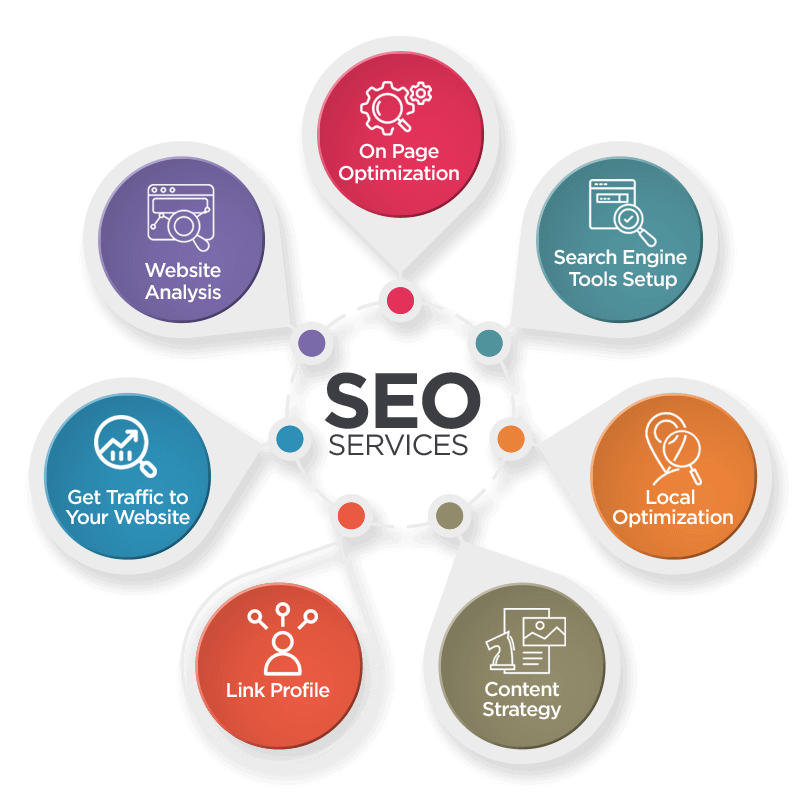
SEO is the acronym for Search Engine Optimization, which consists of many diverse facets, such as: 

  • On-page optimization (e.g., content, keywords, meta tags)
  • Off-page optimization (e.g., backlinks, social signals)
  • Technical SEO (e.g., site speed, mobile-friendliness, structured data)
  • Local SEO (e.g., optimizing for “near me” searches)

All of these components contribute to your website being as friendly to search engines and visitors as possible. 

Why SEO is Important for Business?

  1. Increased Visibility and Brand Awareness: Achieving and maintaining the number one spot on Google will provide businesses with up to 70% of all searches made online. Advanced SEO techniques will always put your business in front of people who are in search of the services he has to offer hence improving the visibility and branding of the business. 
  1. Cost-Effective Marketing: SEO is one of the very few forms of advertising which yield permanent results for businesses. As soon as a business’s website is able to rank, it will begin to receive uninterrupted and consistent traffic without the need of surplus advertising. Investing in the right SEO services will ensure long term enhanced ROI. 
  1. Builds Trust and Credibility: Considerable levels of trust are generally afforded to businesses that are ranked in the first position in the search. This is achieved by improving the sites backlinking, its structure, and the content optimization as per the searches, which a professional SEO agency can do for you and all this will enhance the trust factor of users for your site.
  1. Enhanced User Experience: SEO aligns with user experience improvement. It helps with faster website loading, site construction, and even mobile compatibility. All of these factors allow for more visitor enjoyment of your website, as well as more sustained engagement and conversions. 
  1. Allows for Outperforming Industry Rivals: SEO is an area your rivals have most likely already invested in. Without an investment, your business is likely to fall behind. A well-respected SEO agency allows you to fill in gaps and outperform your competitors, thus attaining your business’s goals and establishing authority in the niche. 

Picking the Correct SEO Agency:

SEO packages vary, and with that, not all SEO services are the same. Ensure the agency has proven outcomes for your particular industry and is willing to customize packages to your set goals. 

At Logicwell Technologies, we provide full-spectrum SEO services including: 

  • Expert SEO Consulting.
  • Content strategy including keyword discovery and optimization.
  • SEO diagnostics and technical audits.
  • Local SEO and reputation management.
  • Comprehensive performance reports.

Whether you want a basic optimization and tiered package, we have the capability to customize deliverables.

Conclusions:

In today’s online marketplace, Search Engine Optimization (SEO) is fundamentally critical for businesses. SEO not only boosts visibility for the target audience, it also helps businesses grow organically and compete effectively in their industries. 

Outranking your business helps your competitors take the lead, so take action before it is too late. SEO agencies such as Logicwell Technologies are able to craft and implement winning SEO strategies for businesses. Visit our website today to check our SEO packages and take the first step towards your business’s digital growth.